Refresh
Why do most students fail to manage their time effectively ?
Every student has the same 24 hours in a day, yet some excel while others constantly struggle to keep up. Why? Poor time management is often the hidden reason behind missed deadlines, lower grades, stress, and burnout. From endless social media scrolling and procrastination to poor planning and lack of focus, many students unknowingly waste valuable time that could shape their future. This article explores the major causes of poor time management among students, its impact on academic performance and mental well-being, and practical solutions that can transform daily habits. Discover how better time management can unlock success and confidence.

Share
Why do most student fail to manage their time effectively ?
Introduction
Time is one of the most valuable resources available to every individual. Unlike money or material possessions, time cannot be recovered once it is lost. For students, effective time management is essential for academic success, personal development, and maintaining a healthy balance between studies and other aspects of life. However, poor time management has become a common problem among students worldwide. Many students struggle to organize their daily activities, prioritize tasks, and meet deadlines. As a result, they often experience stress, poor academic performance, and reduced productivity.
In today's digital age, students face numerous distractions, including social media, online entertainment, and excessive smartphone use. Combined with increasing academic demands and extracurricular responsibilities, these distractions make it difficult for students to manage their time effectively. Poor time management not only affects educational achievement but also impacts mental health, confidence, and future career success.
This article explores the causes, effects, and solutions to poor time management among students while emphasizing the importance of developing strong time management skills for long-term success.

What Is Time Management?
Time management refers to the process of planning, organizing, and controlling how much time is spent on specific activities. Good time management allows students to complete tasks efficiently, reduce stress, and achieve their goals. It involves setting priorities, creating schedules, avoiding distractions, and maintaining discipline.
Students who manage their time effectively can balance academic responsibilities with personal interests, family commitments, and social activities. In contrast, students who fail to manage their time often find themselves overwhelmed by unfinished assignments, approaching deadlines, and examination pressure.
Importantly, time management is not about being busy every moment of the day. Rather, it is about using available time wisely and productively to achieve desired outcomes.
Major Causes of Poor Time Management Among Students
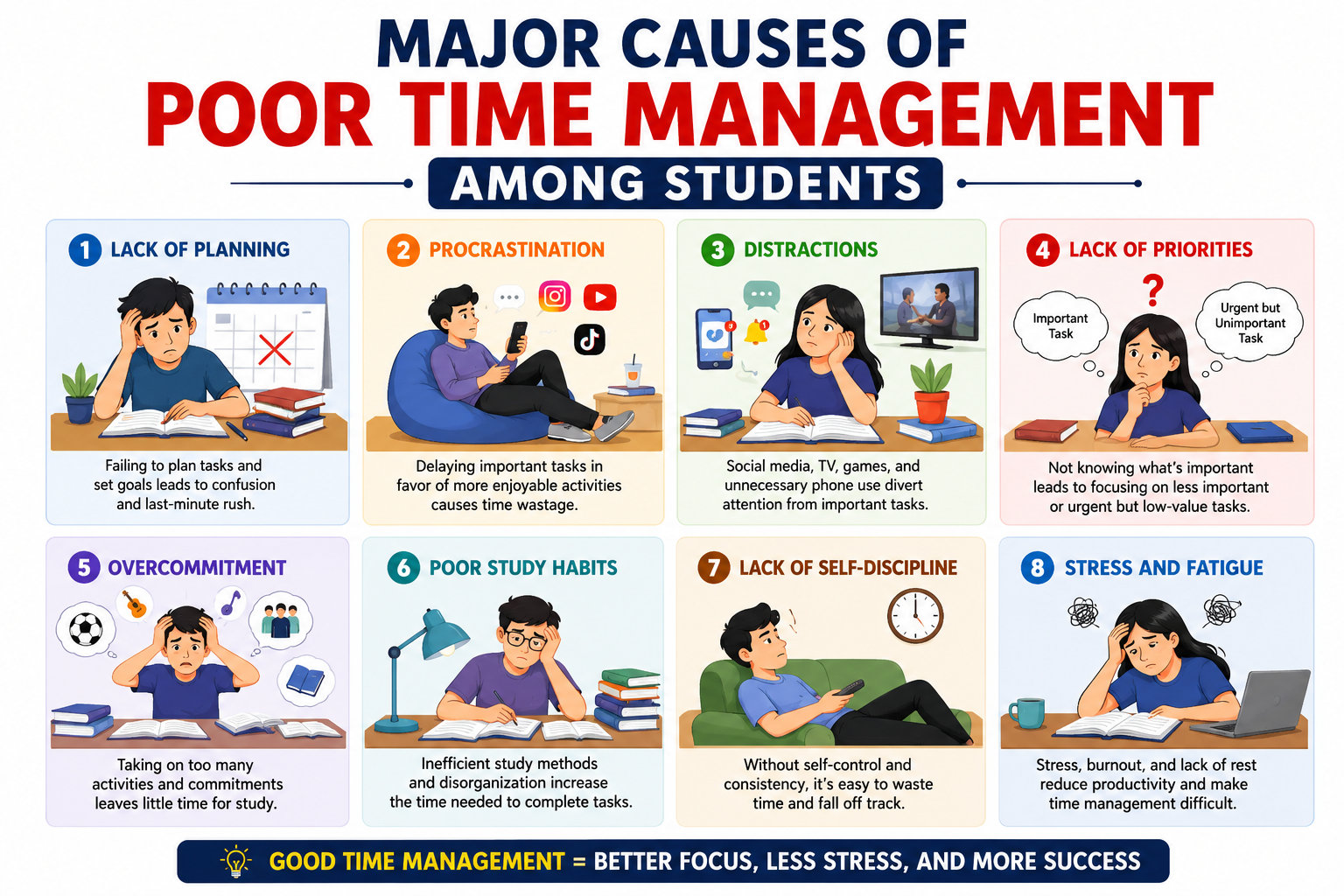
Procrastination
Procrastination is one of the leading causes of poor time management. Many students delay important tasks such as studying, completing assignments, or preparing for examinations because they believe they have enough time to finish them later.
This behavior may result from fear of failure, lack of motivation, perfectionism, or a preference for more enjoyable activities. Unfortunately, postponing important work often creates unnecessary pressure and reduces the quality of outcomes.
Excessive Use of Technology
Technology provides valuable educational resources, but it can also become a significant source of distraction. Students often spend excessive amounts of time on social media platforms, online gaming, streaming services, and messaging applications.
Hours spent scrolling through social media or watching videos reduce the time available for studying and completing coursework, ultimately affecting academic performance.
Lack of Planning
Many students fail to create daily schedules or study plans. Without proper planning, they may use their time inefficiently and forget important deadlines.
Poor planning can also lead students to underestimate the amount of time needed to complete assignments, causing stress when multiple deadlines occur simultaneously.
Poor Prioritization Skills
Students frequently struggle to determine which tasks are most important. They may spend time on less significant activities while ignoring urgent academic responsibilities.
The inability to prioritize tasks effectively often results in rushed work, missed deadlines, and lower-quality performance.
Overcommitment
Many students participate in numerous extracurricular activities, sports, clubs, volunteer programs, and part-time jobs. While these activities can contribute to personal development, excessive involvement may leave insufficient time for academic responsibilities.
Managing too many commitments can lead to exhaustion and difficulty maintaining a balanced schedule.
Lack of Self-Discipline
Effective time management requires self-control and consistency. Students who struggle with discipline often find it difficult to follow schedules, avoid distractions, and remain focused on long-term goals.
Without discipline, even the best plans may fail to produce positive results.
Effects of Poor Time Management
Poor Academic Performance
One of the most noticeable consequences of poor time management is lower academic achievement. Students who fail to allocate adequate study time often perform poorly on examinations and assignments.
Last-minute preparation reduces understanding and retention of course material, making it difficult to achieve academic success.
Increased Stress and Anxiety
Poor time management creates constant pressure as deadlines approach. Students may feel overwhelmed by unfinished tasks and become anxious about meeting expectations.
Long-term stress can negatively affect concentration, memory, and emotional well-being.
Sleep Deprivation
Students who procrastinate often stay awake late at night to complete assignments. Insufficient sleep can result in fatigue, reduced concentration, and poor cognitive performance.
A lack of rest also affects physical health and emotional stability.
Reduced Quality of Work
Rushed assignments are often characterized by careless mistakes, weak research, and poor presentation. Students who leave tasks until the last minute have little opportunity to review and improve their work.
As a result, the overall quality of their academic performance declines.
Negative Impact on Mental Health
Persistent academic pressure and stress can contribute to mental health challenges such as anxiety, depression, and burnout.
Students experiencing these issues may lose motivation and confidence, making it even harder to manage their responsibilities effectively.
Missed Opportunities
Students with poor time management skills often spend much of their time trying to catch up on overdue work. Consequently, they may miss valuable opportunities such as internships, leadership programs, competitions, workshops, and networking events.
These missed experiences can limit personal and professional growth.
Why Effective Time Management Is Important
Improves Academic Success
Students who manage their time effectively are more likely to complete assignments on time, prepare thoroughly for examinations, and achieve better grades.
Reduces Stress
Proper planning and organization reduce the pressure associated with approaching deadlines, allowing students to feel more relaxed and in control.
Enhances Productivity
Time management helps students accomplish more tasks in less time by focusing on priorities and avoiding distractions.
Promotes Personal Development
Managing time effectively encourages responsibility, independence, self-confidence, and decision-making skills that are valuable throughout life.
Supports Work-Life Balance
Good time management allows students to balance academic responsibilities with family commitments, hobbies, exercise, and social activities.
Maintaining this balance contributes to overall well-being and happiness.
Strategies to Improve Time Management
Set Clear Goals
Students should establish specific, measurable, achievable, relevant, and time-bound (SMART) goals. Clear goals provide direction and motivation.
Create a Daily or Weekly Schedule
Developing a structured timetable helps students allocate sufficient time for classes, studying, assignments, and personal activities.
Digital calendars, planners, and scheduling applications can help improve organization.
Prioritize Important Tasks
Students should focus on urgent and high-priority tasks before addressing less important activities. Creating a daily task list can help identify priorities.
Minimize Distractions
Limiting social media use, turning off unnecessary notifications, and creating a dedicated study space can significantly improve concentration.
Break Large Tasks into Smaller Steps
Large projects can appear overwhelming. Dividing them into smaller, manageable tasks makes them easier to complete and reduces procrastination.
Develop Self-Discipline
Building consistent habits and following established schedules strengthens self-discipline over time.
Students who practice discipline are more likely to remain focused and productive.
Learn to Say No
Avoiding unnecessary commitments helps students maintain a manageable workload and focus on their primary responsibilities.

Maintain a Healthy Lifestyle
Regular exercise, sufficient sleep, and a balanced diet improve energy levels, concentration, and overall productivity.
Healthy students are better equipped to manage their time effectively.
The Role of Parents and Teachers in Time Management
Support from Parents
Parents can help students develop time management skills by encouraging routines, monitoring study habits, and providing a supportive learning environment.
They can also teach the importance of balancing academic responsibilities with leisure activities.
Guidance from Teachers
Teachers play a crucial role by helping students understand deadlines, organize assignments, and develop effective study strategies.
Providing clear expectations and constructive feedback can encourage better time management practices.
Conclusion
Poor time management is a significant challenge faced by students across the world. Factors such as procrastination, excessive technology use, lack of planning, poor prioritization, overcommitment, and insufficient self-discipline contribute to this issue. The consequences can be severe, including poor academic performance, increased stress, sleep deprivation, reduced work quality, and negative impacts on mental health.
Fortunately, poor time management can be overcome through conscious effort and effective strategies. By setting clear goals, creating schedules, prioritizing tasks, minimizing distractions, and developing self-discipline, students can improve their productivity and achieve greater success.
Ultimately, time management is a lifelong skill that extends beyond academic achievement. Students who learn to manage their time wisely are better prepared to meet challenges, seize opportunities, and build successful and fulfilling futures.
Comments (0)
Leave a comment
No comments yet. Be the first to share your thoughts!
About the Author

Nithya
Tell us a little about yourself.