Economy
Why a Product Can Become More Expensive Without Its Price Change
A product does not always become more expensive when its price tag increases. Sometimes, customers pay the same amount for less quantity, lower quality or higher costs of use. This article explores shrinkflation, hidden quality changes and the additional expenses that affect everyday purchases. It examines why businesses make these decisions, how consumers can recognise hidden increases and why honest product information matters. Discover why the true cost of a product goes far beyond its price tag.
Share
Why a Product Can Become More Expensive Without Its Price Change
Introduction- The Price Tag Does Not Tell the Whole Story
Imagine buying your favourite packet of biscuits for Rs. 200. You have bought it at the same price for several months, so you believe nothing has changed. However, one day you notice that the packet contains fewer biscuits. You are still paying Rs. 200, but you are receiving less than before. In reality, the product has become more expensive, even though its price has not increased.
This is a simple example of a hidden change in the cost of everyday life. When people think about rising prices, they usually imagine a shop changing a price tag from Rs. 200 to Rs. 250. However, the real cost of buying something is not always shown by the number printed on its packaging. The quantity, quality, usefulness and additional costs of a product can change while its price remains the same.
This issue affects almost everyone, from families buying food to students purchasing stationery and workers paying for transport. It is particularly important when people have limited incomes and must carefully manage their spending. A stable price may create the feeling that life is becoming more affordable, even when people are slowly losing purchasing power.
Understanding this hidden form of price increases helps consumers look beyond price tags. It also raises an important question: if customers pay the same amount but receive less value, should businesses and consumers consider the product cheaper, unchanged or more expensive?
Shrinkflation- Paying the Same Amount for Less
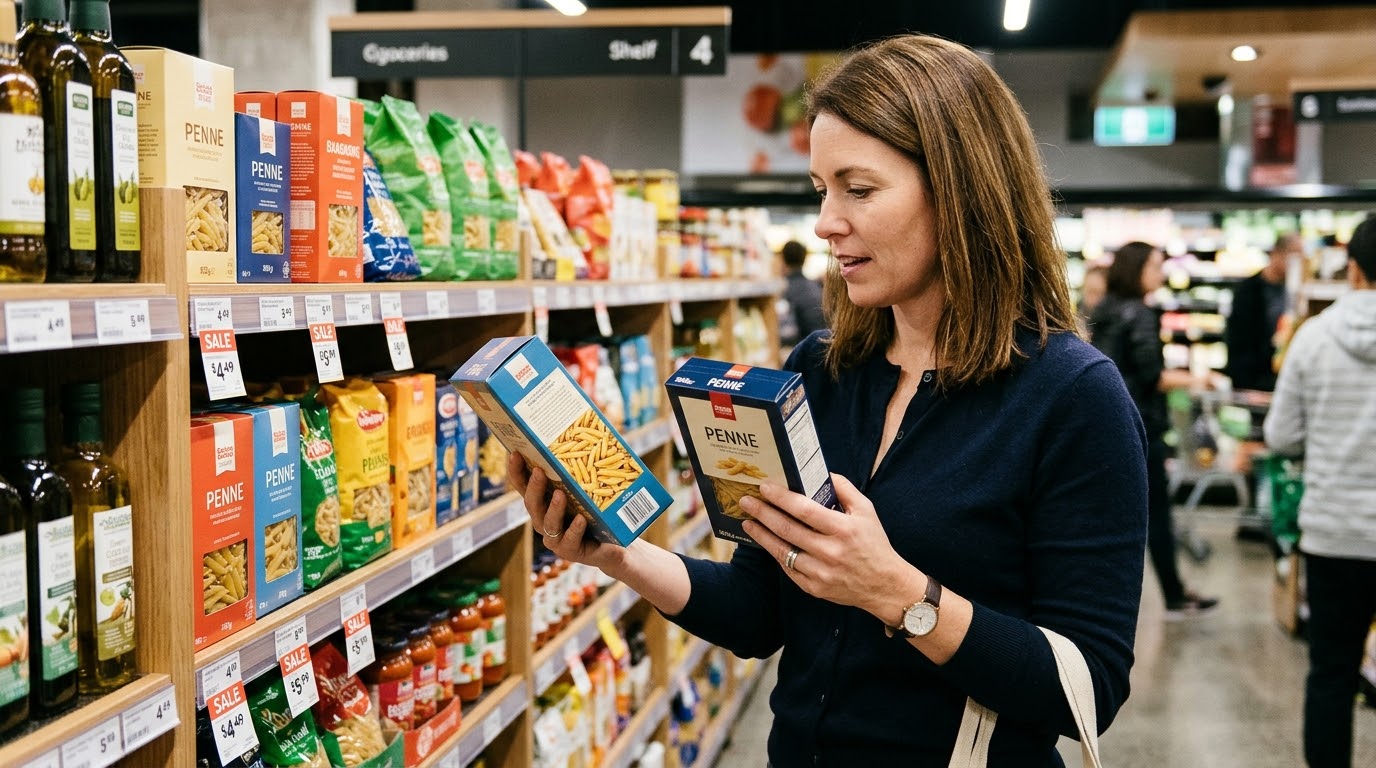
One of the clearest reasons a product becomes more expensive without a price change is a practice known as shrinkflation. This happens when a company reduces the quantity or size of a product while keeping its selling price unchanged.
For example, imagine that a packet of washing powder originally contains one kilogram and costs Rs. 1,000. Later, the company reduces the quantity to 800 grams but continues charging Rs. 1,000. Customers may not immediately notice the change because the packaging and price look familiar. Nevertheless, they are paying more for each gram of washing powder.
Initially, the customer pays Rs. 1 per gram. After the reduction, the cost becomes Rs. 1.25 per gram. This is a 25 per cent increase in the price per gram, despite there being no increase in the total price.
Companies may reduce product sizes because the cost of raw materials, packaging, electricity, transport or labour has increased. Instead of raising the price directly, a business may choose to sell a smaller quantity at the familiar price. This can help it protect its profit margin while avoiding an obvious price increase that might discourage customers.
However, the practice raises questions about fairness. If the quantity reduction is difficult to notice, customers may continue buying the product without understanding that they are receiving less. Although reducing the size of a product is not automatically dishonest, unclear packaging or misleading presentation can prevent consumers from making informed choices.
The important lesson is that the price of a complete packet is not enough to judge whether a product has become more expensive. Customers should compare the price per gram, litre, kilogram or individual item. Sometimes, the smallest-looking change on a package can make a considerable difference to household spending over time.
When Quality Falls but the Price Stays the Same
A product does not need to become smaller to offer less value. Its quality can decline while the price remains unchanged. This is another hidden way in which consumers can end up paying more for what they receive.
Consider a bottle of fruit juice that costs Rs. 300. Previously, it may have contained a certain amount of fruit juice, but the manufacturer later changes the ingredients, reduces the fruit content or uses cheaper substitutes. The bottle still looks similar, and its price remains Rs. 300. However, the product may no longer provide the same taste, quality or nutritional value.
A similar situation can occur with clothing, electronics, furniture and household products. A shirt may cost the same as before but use thinner fabric. A phone charger may retain its price while becoming less durable. A household item may look unchanged but break sooner than the previous version.
In such situations, the cost of receiving the same level of quality can increase. Customers may need to buy replacements more frequently, spend money on repairs or purchase additional products to achieve the same result.
For example, suppose a durable household item costs Rs. 2,000 and lasts for two years. Its purchase cost is spread across a longer period of use. If a replacement costs the same amount but lasts only one year, the customer must spend Rs. 4,000 over two years to maintain the same basic need. The price tag has not changed, but the long-term cost has doubled.
However, not every change in quality is necessarily a deliberate attempt to mislead consumers. Companies may change ingredients, suppliers or manufacturing methods for different reasons. The critical issue is whether customers receive clear information and whether the product continues to deliver the value they reasonably expect.
This shows why price comparisons should include durability, performance and quality, rather than focusing only on the amount paid at the shop.
The Hidden Costs Behind an Unchanged Price
Sometimes, the product itself remains exactly the same, but the total cost of obtaining and using it increases. These additional expenses can make a familiar purchase more expensive without changing its advertised price.
Transport is one example. Imagine that a household regularly buys a bag of rice for Rs. 2,500. The price remains stable, but bus fares or fuel costs rise. If travelling to the shop becomes more expensive, the household must spend more money to obtain the same bag of rice. The product's price is unchanged, but the cost of purchasing it has increased.
Electricity provides another example. A household appliance may retain its original selling price, yet using it becomes more expensive when electricity tariffs rise. Similarly, a printer may cost the same as before, but the price of ink cartridges increases. The original purchase price does not reveal the full cost of owning the product.
Packaging fees, delivery charges, service fees and maintenance costs can create similar effects. A product advertised at a low price may become more expensive when additional charges are included at checkout. This is especially frustrating when those charges are revealed only after customers have already decided to buy.
There is also an economic factor known as opportunity cost. This means the value of what a person gives up when choosing one option over another. If the cost of food, rent and transport rises while a person's income stays unchanged, buying a particular product may require sacrificing another important need. Even if that product's price remains stable, it becomes harder to afford in practical terms.
This does not mean that every additional expense is a price increase imposed by the seller. Transport costs, taxes, energy prices and other expenses may arise elsewhere in the supply chain or economy. Nevertheless, consumers experience them together when managing their budgets.
Therefore, a fair understanding of affordability must consider the full cost of buying, using and maintaining a product, not simply its advertised price.
Conclusion- Looking Beyond the Price Tag
A product can become more expensive without its price changing because the quantity may decrease, the quality may decline or the costs of buying and using it may rise. These changes reveal an important difference between the price printed on a label and the actual value a consumer receives.
For businesses, keeping prices unchanged may sometimes be necessary to manage rising production costs and remain competitive. Reducing package sizes or changing production methods can be legitimate business decisions. However, businesses have a responsibility to avoid misleading customers and to communicate significant changes clearly. Consumers should not have to investigate every purchase simply to discover what they are paying for.
Consumers, meanwhile, can protect themselves by comparing unit prices, checking package quantities, reading ingredient labels, examining product quality and considering long-term maintenance costs. A cheaper-looking product is not always the more economical choice, especially if it needs to be replaced frequently or requires expensive additional purchases.
Governments and consumer protection organisations also have a role in ensuring that product information is clear and that misleading practices are addressed. Transparent labelling and honest advertising help people make better decisions and encourage fair competition between businesses.
Ultimately, the real cost of a product cannot always be measured by the money handed over at the checkout. It must also be measured by the quantity received, the quality enjoyed and the expenses involved in using it. A price tag may remain unchanged, but the value behind it can quietly disappear. Recognising this difference is an essential step towards becoming a more informed consumer.
Comments (0)
Leave a comment
No comments yet. Be the first to share your thoughts!
About the Author
Himethma Perera
Tell us a little about yourself.