Refresh
Who Am I Really? The Science Behind Your True Personality
Discover the science behind who you truly are and why you think differently from others. This guide explores how genetics, brain chemistry, and life experiences shape your personality, using proven models like the Big Five and MBTI. Learn how to understand your strengths, weaknesses, relationships, and career potential. Stop relying on viral quizzes and start uncovering your authentic self with research-backed methods. Take the first step on your self-discovery journey today and see yourself in a whole new light.
Share
Who Am I Really? The Science Behind Why You Think Differently and How to Discover Your True Personality
Why You Think Differently and the Science Behind Your Personality
“Who am I, really?”
“Why do I think differently from others?”
At some point in life, almost everyone asks these questions.
Maybe it happens when you feel out of place in a group.
Maybe when your decisions don’t match what others expect.
Or when you realize that what excites others simply doesn’t excite you and vice versa.
In today’s digital world, many people try to answer these deep questions using surprisingly shallow tools. You’ve probably seen them those viral social media quizzes like:
• “Your personality based on the first letter of your name”
• “Pick a color and we’ll reveal your true self”
They’re fun. Entertaining. Addictive.
But let’s be honest they are not real answers.
Because your personality is not something that can be decoded by a random quiz or a viral trend.
It is something far deeper.
Something shaped by biology, psychology, experience, and time.
This article is your guide not just to understanding personality, but to understanding yourself. And by the end, you might not have all the answers… but you will finally be asking the right questions.
The Truth Most People Don’t Realize
Here’s something powerful:
You are not “weird” for thinking differently.
You are not “wrong” for feeling out of place.
You are simply wired differently.
And that wiring? It’s not random.
It’s the result of two major forces working together throughout your life:
1. Genetics (What You’re Born With)
2. Environment (What Shapes You)
Psychologists have spent decades studying personality, and one of the most widely accepted conclusions is this:
Your personality is a combination of nature and nurture.
You inherit certain tendencies from your genes how sensitive you are, how you respond to stress, how social you feel.
At the same time, your upbringing, culture, education, and life experiences shape how those tendencies develop.
This means something important:
You are not a fixed identity.
You are a dynamic system.
The Biology Behind Your Personality
Let’s go deeper.
Your personality isn’t just “in your mind.” It is physically rooted in your brain.
Inside your brain are chemical messengers called neurotransmitters. Two of the most important ones are:
• Dopamine
• Serotonin
These chemicals influence how you feel, behave, and respond to the world.
Dopamine: The Motivation & Reward Chemical
Dopamine is linked to:
• Excitement
• Risk-taking
• Curiosity
• Social stimulation
Some people have brains that are more responsive to dopamine. These individuals often:
• Love social environments
• Seek new experiences
• Enjoy challenges and risks
We often call them extroverts.
Serotonin: The Stability & Mood Regulator
Serotonin is linked to:
• Emotional stability
• Calmness
• Well-being
People with balanced serotonin levels may:
• Prefer calm environments
• Enjoy solitude
• Avoid overstimulation
We often call them introverts.
Here’s the key takeaway:
If you prefer quiet spaces over crowds, that’s not a flaw.
If you love being around people and thrive in energy, that’s not a flaw either.
It’s your brain doing what it’s naturally designed to do.
Why You Feel “Different” From Others
At some point, most people feel like they don’t quite fit in.
Maybe:
• You think more deeply than others
• You feel emotions more intensely
• You prefer solitude while others seek constant interaction
This difference can feel isolating.
But what if that difference is actually your strength?
The world needs:
• Deep thinkers
• Creative minds
• Logical problem-solvers
• Empathetic listeners
There is no single “correct” personality.
There are only different ways of experiencing reality.
The Problem With Fake Personality Quizzes
Let’s talk about those viral quizzes again.
They’re popular because:
• They’re quick
• They’re fun
• They give instant answers
But they also create a dangerous illusion:
That your identity can be simplified into a label.
These quizzes often:
• Have no scientific basis
• Use vague, general statements
• Give results that apply to almost everyone
This is known as the Barnum Effect when people believe generic descriptions are uniquely about them.
So while these quizzes may feel accurate, they are not reliable tools for self-discovery.
If you truly want to understand yourself, you need something better.
The Scientific Way to Understand Personality
Psychologists have developed structured, research based models to understand personality.
These are not meant to box you in but to help you see patterns in how you think, feel, and behave.
Let’s explore the two most widely used systems.
The Big Five Personality Model (OCEAN)
This is one of the most respected personality models in modern psychology.
It breaks personality into five key dimensions:
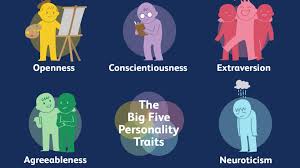
1. Openness
How open are you to new experiences, ideas, and creativity?
High openness:
• Imaginative
• Curious
• Creative
Low openness:
• Practical
• Traditional
• Routine-oriented
2. Conscientiousness
How organized and responsible are you?
High conscientiousness:
• Disciplined
• Goal-oriented
• Reliable
Low conscientiousness:
• Spontaneous
• Flexible
• Less structured
3. Extraversion
How energized do you feel around others?
High extraversion:
• Social
• Outgoing
• Energetic
Low extraversion (introversion):
• Reserved
• Reflective
• Prefer solitude
4. Agreeableness
How cooperative and empathetic are you?
High agreeableness:
• Kind
• Compassionate
• Cooperative
Low agreeableness:
• Competitive
• Analytical
• Direct
5. Neuroticism
How sensitive are you to stress and emotions?
High neuroticism:
• Emotionally reactive
• Sensitive
• Prone to anxiety
Low neuroticism:
• Calm
• Stable
• Resilient
Important: You are not “high” or “low” in everything.
You exist somewhere on a spectrum for each trait.
That’s what makes personality complex and human.
The Myers-Briggs Personality System (MBTI)
Another popular system divides personality into 16 types using four dimensions:
• Introversion (I) vs Extraversion (E)
• Sensing (S) vs Intuition (N)
• Thinking (T) vs Feeling (F)
• Judging (J) vs Perceiving (P)
Your result looks like this:
INTJ, ENFP, ISTP, etc.
Each type represents a different way of:
• Processing information
• Making decisions
• Interacting with the world
Companies, teams, and even therapists use this model to better understand people.
Where You Can Take Real Personality Tests
If you want real insights—not entertainment—you can try scientifically grounded platforms:
• 16Personalities
• Truity
• PsychCentral
These tests take around 10–20 minutes and provide detailed reports.
What Your Results Actually Mean
Here’s something important:
Your personality result is not your destiny.
It does NOT:
• Predict your future
• Limit your potential
• Define your worth
Instead, it helps you understand.
Your Strengths
Are you better at:
• Working alone?
• Leading teams?
• Creative thinking?
Your Weaknesses
Do you:
• Overthink?
• Avoid conflict?
• Struggle with discipline?
Your Ideal Career Paths
Some personalities thrive in:
• Creative industries
• Analytical roles
• People-focused careers
Your Relationships
Understanding personality helps explain:
• Why conflicts happen
• Why communication styles differ
• Why some connections feel effortless
Personality Is Not a Cage, It’s a Map
Many people misunderstand personality frameworks.
They think:
“This is who I am. I can’t change.”
That’s not true.
Personality is not a prison.
It is a map.
It shows:
• Where you are
• How you think
• Where you might go next
But you still choose the path.
The Global Shift Toward Self-Awareness
In today’s world, people are becoming more interested in:
• Mental health
• Self-awareness
• Personal growth
Understanding personality is part of this movement.
Because when you understand yourself:
• You make better decisions
• You build healthier relationships
• You live more authentically
Why This Matters More Than Ever
We live in a world that constantly tells us who to be.
Social media creates:
• Comparison
• Pressure
• Unrealistic standards
Personality awareness helps you break free from that.
It reminds you:
You don’t have to fit in.
You just have to understand yourself.
Meeting Yourself for the First Time
What if the real journey isn’t about becoming someone new…
but about discovering who you already are?
Understanding your personality is like meeting yourself for the first time.
Not the version shaped by expectations.
Not the version created by society.
But the real you.
So, What Should You Do Next?
Instead of relying on random quizzes…
Take a real personality test
Reflect on your results
Observe your behavior in daily life
And most importantly:
Be curious about yourself.
Because the moment you start understanding yourself…
everything else in life starts making more sense.
How Personality Affects Your Success in Life
One of the most searched questions globally is:
“Does personality affect success?”
The answer is yes—but not in the way most people think.
Success is not determined by being an introvert or extrovert. Instead, it depends on how well you understand and use your personality traits.
Career Success
Different personality traits align with different career paths:
• High Openness → Creative careers (design, writing, innovation)
• High Conscientiousness → Structured careers (finance, management, law)
• High Extraversion → People-focused roles (sales, leadership, marketing)
• High Agreeableness → Helping professions (teaching, counseling, HR)
How Personality Impacts Relationships
Another high-ranking search topic is:
“Why do relationships fail?”
A big reason is personality mismatch and misunderstanding.
Common Relationship Conflicts
• Introvert vs Extrovert lifestyle differences
• Emotional vs logical decision-making
• Structured vs spontaneous habits
Understanding personality helps you:
• Communicate better
• Reduce conflicts
• Build stronger connections
Can You Change Your Personality?
This is one of the most debated topics in psychology.
The Truth:
Your core personality traits are relatively stable
But your behaviors and habits CAN change
For example:
• An introvert can become socially confident
• A disorganized person can build discipline
This concept is known as personality development.
Personality Development Tips
Here are practical, globally relevant tips:
1. Self-Awareness First
Take a real personality test and reflect on your behavior.
2. Step Outside Your Comfort Zone
Growth happens when you challenge your natural tendencies.
3. Build Emotional Intelligence
Learn to understand your emotions and others’.
4. Track Your Patterns
Notice:
• What drains your energy
• What excites you
5. Improve Communication Skills
Personality differences often cause misunderstandings.
Cultural Influence on Personality
Your personality is also shaped by where you grow up.
For example:
• Western cultures encourage individuality
• Eastern cultures emphasize community
This affects:
• Decision-making
• Communication style
• Emotional expression
Social Media vs Real Personality
In today’s digital world, there’s a growing gap between:
Who you are online
Who you are in real life
Social media often:
• Encourages comparison
• Creates unrealistic expectations
• Pushes people to fake personalities
Important Insight:
Your real personality is not your Instagram version.
Common Personality Myths
Myth 1: Introverts are shy
Truth: Introverts simply recharge alone
Myth 2: Extroverts are always confident
Truth: They just gain energy from social interaction
Myth 3: Personality cannot change
Truth: It evolves over time
Myth 4: One personality type is better
Truth: Every personality has strengths and weaknesses
The Future of Personality Science
Personality research is evolving with technology.
New trends include:
• AI-based personality analysis
• Neuroscience-driven insights
• Personalized mental health tools
This means in the future, understanding yourself will become even more accurate.
Action Plan for You
Take a scientifically valid personality test
Write down your top 3 strengths
Identify 2 areas to improve
Apply insights in daily life
• Do you think personality is fixed or changeable?
• What personality type are you?
• Have you ever felt different from others?
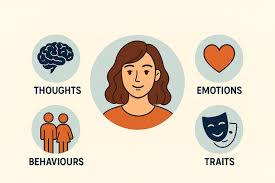
• What is personality?
Personality is the combination of thoughts, emotions, and behaviors shaped by genetics and environment.
• Why am I different from others?
Differences come from unique brain chemistry, life experiences, and personality traits.
• You are not here to fit into someone else’s definition.
You are here to understand your own.
• Because the moment you truly understand yourself…
you stop chasing validation—and start living with purpose.
Comments (1)
Leave a comment
N
Nadeera Hashan
Jul 29, 2026
Anyone can help me. How do I take personality test ?
About the Author

Lakshani Madurangika
Tell us a little about yourself.