The Dark Side of Social Media: How Algorithms Trap Us and How to Take Back Control
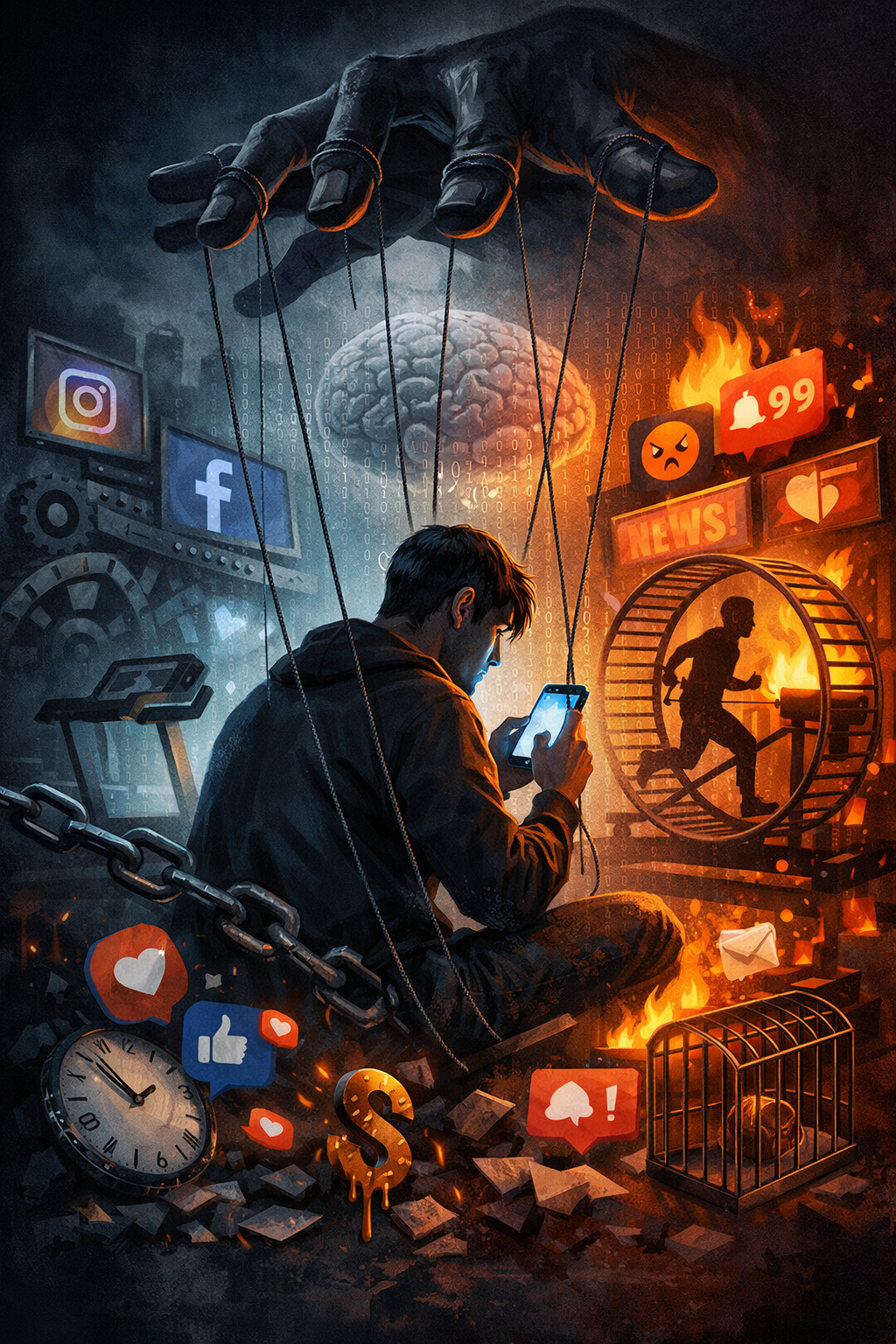
You think you’re scrolling. But the algorithm is studying you. Every swipe feeds a system designed to capture your attention, shape your thoughts, and keep you coming back for more. What feels like harmless entertainment may be silently draining your focus, confidence, and time. If you’re ready for a powerful reality check — and a smarter way to take back control — this is the article you need to read.
The Dark Side of Social Media: How Algorithms Trap Us and How to Take Back Control
Social media was created to connect people. It promised friendship without borders, opportunity without limits, and a voice for everyone. And in many ways, it delivered. We can build businesses, learn new skills, promote our passions, and stay close to people we love.
But behind the filters, reels, and trending sounds lies a darker truth.
Social media is not just a tool we use. It is a system designed to use us.
This article is not written to scare you away from social media. It is a reality check. Because once you understand how the system works, you stop being controlled by it — and start controlling it.
Let’s talk honestly.

1. The Algorithm Trap: Why You Can’t Stop Scrolling
Have you ever opened an app for “just five minutes” and looked up an hour later wondering what happened?
That’s not a lack of discipline. That’s design.
Platforms do not make money from your happiness. They make money from your attention.
The longer you stay, the more ads you see.
The more ads you see, the more profit they generate.
So what do they do?
They build algorithms that:
- Study your behavior
- Track what you pause on
- Measure what you like, comment, and share
- Notice how long you watch a video
- Even monitor what you rewatch
Then they feed you more of it.
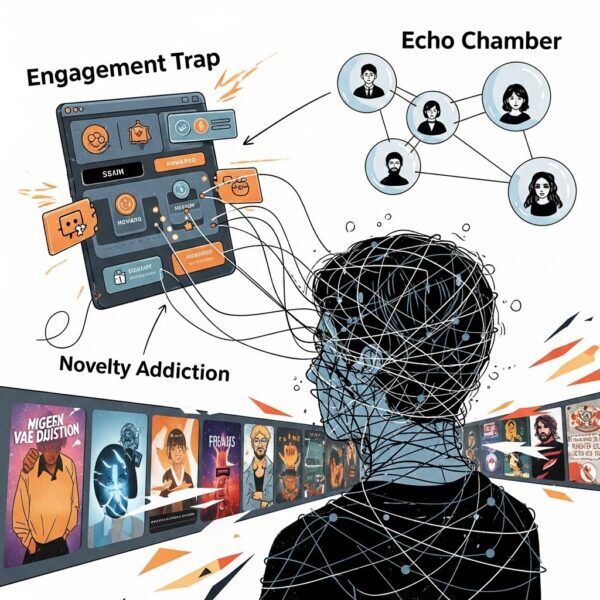
This creates a personalized digital bubble — content designed to keep you emotionally hooked.
Not informed.
Not educated.
Hooked.
It’s called a “dopamine loop.” Every scroll is a possibility of something exciting. A funny reel. A shocking headline. A beautiful face. A viral drama.
Your brain gets small unpredictable rewards — just like gambling.
And the worst part?
You think you are choosing the content.
But the content is choosing you.
2. The Illusion of Productivity: Busy But Not Moving
- Social media makes you feel busy.
- You watch business tips.
- You follow motivational pages.
- You save “how to get rich” reels.
- You share productivity quotes.
But ask yourself honestly:
How much real action did you take?
Consuming self-improvement content feels like growth. But it is not growth.
Watching 100 fitness videos will not build muscle.
Saving 50 entrepreneurship posts will not build a business.
Following successful influencers will not change your habits.
It creates a false sense of achievement — a “workhouse” effect.
You feel mentally exhausted at the end of the day, but physically you have done nothing significant. Your brain is overloaded, but your real life remains unchanged.
That is one of social media’s biggest psychological traps.
3. The Comparison Disease
Social media is a highlight reel.
You see:
- Vacations
- Perfect bodies
- Luxury cars
- Business wins
- Engagement rings
- Happy couples
What you don’t see:
- Debt
- Breakdowns
- Loneliness
- Failures
- Anxiety
20 takes before the “perfect” photo
Constant exposure to curated perfection creates silent comparison.
You start asking:
Why am I behind?
Why don’t I look like that?
Why is everyone else successful?
Comparison slowly steals gratitude.
And the scary part? Even influencers compare themselves to other influencers. The cycle never ends.
4. Emotional Manipulation Through Trends and Outrage
Notice how fast drama spreads?
Negative content travels faster than positive content because it triggers stronger emotions.
- Anger.
- Fear.
- Shock.
- Jealousy.
Algorithms prioritize content that creates strong reactions because reactions equal engagement.
Engagement equals money.
This is why controversial posts go viral. This is why outrage content floods your feed. It keeps you emotionally stimulated — and emotionally unstable.
Over time, this constant stimulation increases:
- Anxiety
- Stress levels
- Short attention span
- Mood swings
You don’t even realize your emotional state is being shaped by what you consume daily.
5. The Attention Span Crisis
Try this: sit quietly for 10 minutes without checking your phone.
If it feels uncomfortable, that’s a sign.
Short-form content has trained our brains to expect stimulation every few seconds. Quick cuts. Fast captions. Instant reward.
This affects:
- Deep reading ability
- Long-term focus
- Critical thinking
- Creativity
Your brain starts craving speed over depth.
Books feel slow.
Long conversations feel boring.
Work tasks feel exhausting.
This is not because you are lazy.
It’s because your brain is being rewired.
6. Social Media and Work Performance
Many people think, “I can multitask.”
But checking notifications every few minutes destroys deep work.
Every interruption resets your focus. Research shows it can take up to 20–25 minutes to regain full concentration after distraction.
Imagine how much productive time is lost daily just by:
Checking messages
Responding to comments
Watching “one quick reel”
Over months and years, this becomes a silent productivity leak.
Your potential is not limited by ability — it’s limited by distraction.
7. Is Social Media Always Bad?
No.
It is powerful.
It can:
Build brands
Create income
Connect communities
Spread awareness
Offer education
The issue is not social media itself.
The issue is unconscious use.
When you use it intentionally, it becomes a tool.
When you use it unconsciously, you become the tool.
8. Signs You May Be Addicted
Be honest with yourself. Do you:
- Check your phone immediately after waking up?
- Feel anxious without internet access?
- Scroll when bored, sad, or stressed?
- Lose sleep because of late-night scrolling?
- Compare your life constantly to others?
- Feel guilty after long scrolling sessions?
If yes, it’s not weakness. It’s conditioning.
But awareness is power.
9. How to Migrate From Addiction to Healthy Use
You don’t need to quit social media completely.
You need boundaries.
Here’s how to shift:
1. Audit Your Feed
Unfollow accounts that:
- Trigger comparison
- Spread negativity
- Waste time
- Promote unrealistic standards
Follow pages that:
- Educate
- Inspire action
- Support your real-life goals
- Your feed should fuel growth, not insecurity.
2. Set Intentional Time Blocks
Instead of random scrolling:
- Allocate 20–30 minutes twice a day.
- Avoid using it first thing in the morning.
- Avoid using it 1 hour before bed.
Morning scrolling programs your mood for the day. Night scrolling disrupts sleep quality.
3. Replace the Habit, Don’t Just Remove It
If you remove scrolling without replacement, you will relapse.
Replace it with:
- Reading 10 pages daily
- Journaling thoughts
- Walking without headphones
- Learning a real-world skill
- Exercising
Your brain needs stimulation. Give it healthier stimulation.
4. Create Before You Consume
If you are a creator, business owner, or influencer, follow this rule:
Create first. Consume later.
Post your content. Work on your goals. Then check your feed.
Otherwise, comparison will influence your creativity.
5. Turn Off Non-Essential Notifications
- Notifications are digital triggers.
- Every ping pulls your attention away from reality.
- Disable everything except what is absolutely necessary.
- Protect your focus like you protect your money.
10. The Bigger Reality Check
Your time is your life.
Every hour spent scrolling is an hour not spent:
Building skills
Strengthening relationships
Improving health
Creating opportunities
In five years, you will not regret the posts you didn’t see.
But you may regret the time you lost.
Social media makes years disappear quietly.
You won’t notice the loss day by day.
But one day, you will look back and wonder where the time went.
11. A Balanced Way Forward
Instead of asking:
“Should I delete social media?”
Ask:
“How can I use this without losing myself?”
Use it to:
- Promote your business
- Share your voice
- Learn strategically
- Network intentionally
But don’t let it define your worth.
Your value is not:
- Your followers
- Your likes
- Your views
- Your viral moments
Real success is built offline.
Final Thoughts
Social media is one of the most powerful inventions of our time.
It can elevate you — or exhaust you.
It can build you — or break your focus.
It can connect you — or isolate you.
The difference lies in awareness.
Once you understand how algorithms work, how comparison steals joy, and how distraction reduces potential, you stop being a passive consumer.
You become intentional.
And intentional people are not easily controlled.
Before you scroll again, pause and ask:
“Is this helping me grow — or just helping time pass?”
Because in the end, your attention is your greatest asset.
Guard it carefully.
Comments (0)
Leave a comment
No comments yet. Be the first to share your thoughts!
About the Author

A passionate and creative content writer with over one year of experience at Fount Beyond, specializing in engaging, informative, and research driven articles. Skilled at turning ideas into compelling content that informs, inspires, and connects with readers. Always eager to explore new topics, bring fresh perspectives, and grow as a writer.