History
Gobekli Tepe :The Place That Began to Question Human History
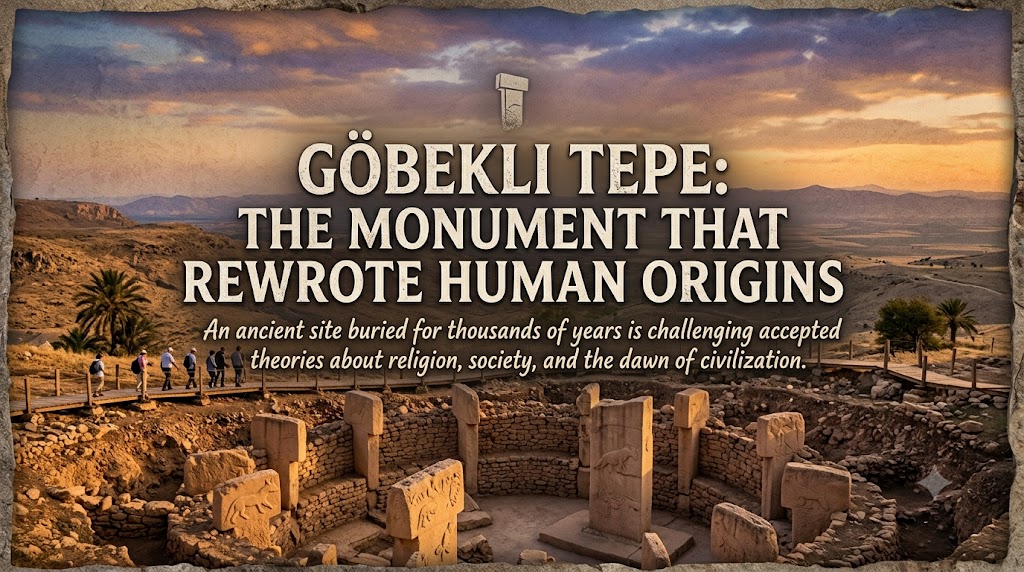
An ancient site buried for thousands of years is challenging accepted theories about religion, society, and the dawn of civilization.
Share
Göbekli Tepe: The Place That Began to Question Human History
Mysterious Construction Dating Back to 9600 BC: The Discovery of Göbekli Tepe, Its Age, and Archaeological Significance
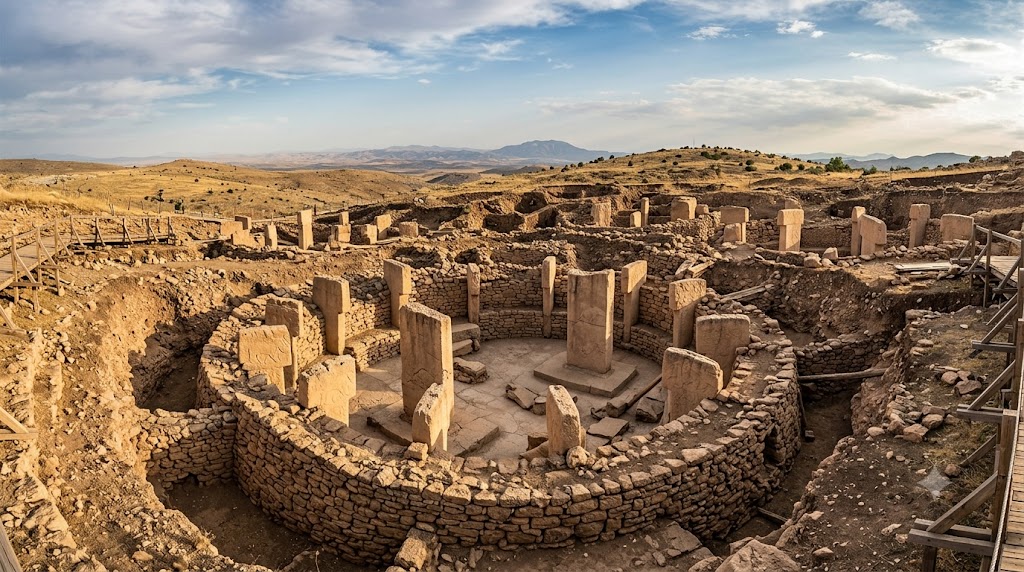
On a high plateau in southeastern Turkey, an ancient structure lies hidden, even older than the world's most famous historical monuments. The site, which remained unknown until 1994, was rediscovered by German archaeologist Klaus Schmidt and his team. Until then, this hill, which had been thought to be a typical Byzantine cemetery, turned out to be an archaeological site of such importance that it could change the entire timeline of human civilization.
The most amazing thing about Göbekli Tepe is that it was built between 9600 and 8200 BC, about 12,000 years ago. This was approximately 7,000 years before the Egyptian pyramids and 6,000 years before Stonehenge in England. It was a time when humans were still using stone tools, agriculture and permanent settlements had not yet emerged, and people lived as nomadic tribes. The fact that such a large scale construction project took place under these conditions shocked the archaeological community.
Its archaeological significance lies in the fact that it shattered long held beliefs about the development of early human civilization. To organize such a massive construction project, these hunter gatherers must have possessed a complex social structure and the ability to organize and control a large workforce. They quarried stone pillars weighing up to 50 tons and standing as high as 5.5 meters, transported them over several kilometers, and erected them in circular formations. Since there were no wheels or metal tools at the time, this was a remarkable achievement in labor organization and resource management. Today, the site is designated as a UNESCO World Heritage Site and is considered the first architectural masterpiece in human history.
Was It the First Religious Center Built by Hunter Gatherers?
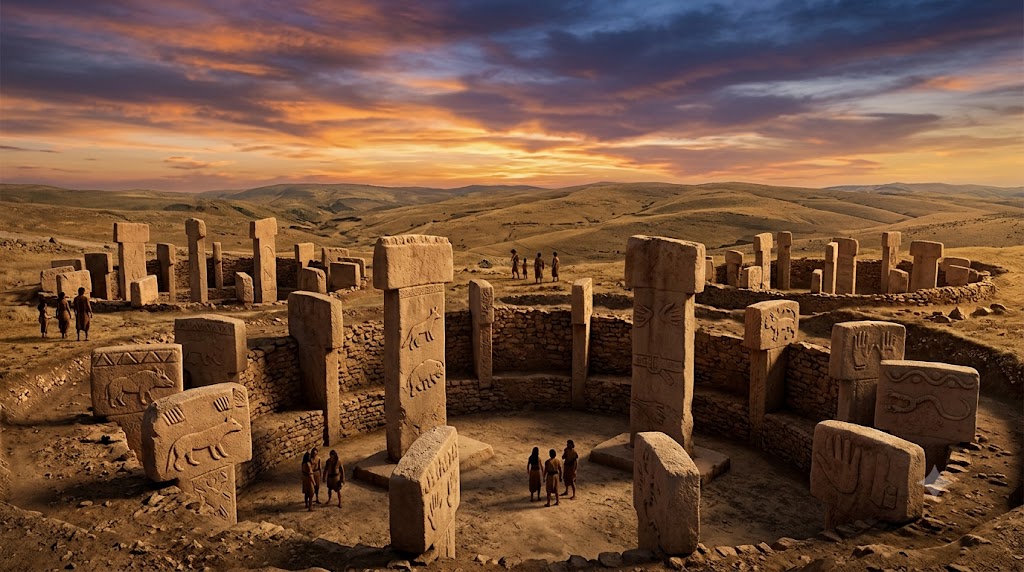
Göbekli Tepe's most striking feature is its circular arrangement of T shaped stone pillars. These are not merely stone pillars. They are decorated with carved hands, fingers, belts, and loincloth like garments, which many scholars believe represent anthropomorphic deities or ancestors. The pillars are also adorned with intricate carvings of animals such as wild boars, jackals, snakes, vultures, and scorpions.
The hypothesis that Göbekli Tepe is the world's oldest temple arose because there is no clear evidence of permanent habitation at the site. Klaus Schmidt proposed that it was a pilgrimage center built by hunter gatherers before the advent of agriculture. According to this theory, people from different regions gathered there to perform rituals and hold ceremonial feasts. Evidence also suggests that some visitors traveled from locations as far as 200 kilometers away.
These discoveries challenge the long accepted theory that agriculture was the primary driving force behind human social organization. Göbekli Tepe suggests that religious beliefs and shared ritual practices may have been powerful forces that united people even before the development of agriculture and permanent settlements. However, more recent excavations have complicated this theory with the discovery of grinding stones and food remains. Some researchers now believe that the site was not purely religious but may have functioned as a permanent or semi permanent settlement where ritual activities also took place.
The Mysterious Site That Changed the History of Human Civilization
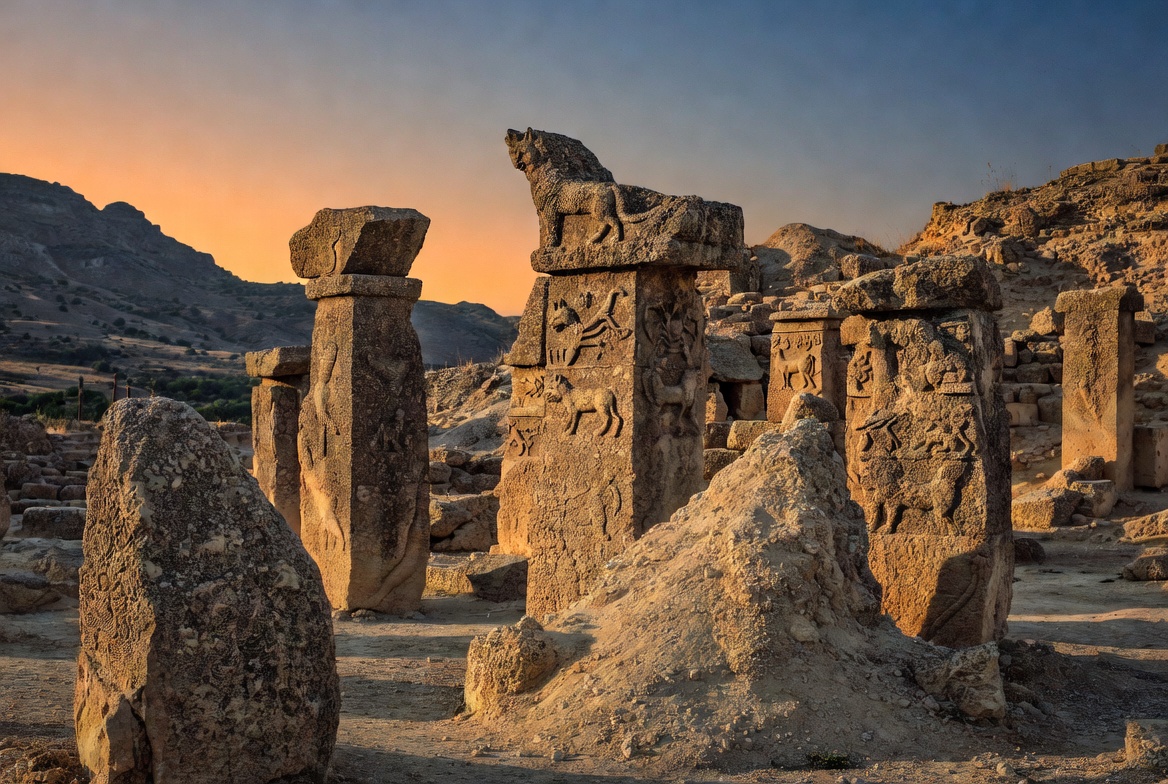
Göbekli Tepe is not only a site that has created excitement within the scientific community but has also become a source of widespread curiosity and controversy. One of its greatest mysteries is that only 5 to 10 percent of the site has been excavated so far. Ground penetrating radar has confirmed the existence of several additional structures beneath the surface, some of which are estimated to date back to around 13,000 BC.
New discoveries continue to emerge, challenging previously accepted theories. For example, what was once believed to be a purely religious site is now increasingly recognized as a place that may also have supported permanent or semi permanent habitation. Another major mystery is the evidence that the buildings were deliberately buried. The structures at Göbekli Tepe appear to have been intentionally covered with soil after years of use, possibly to preserve them or to make way for new structures.
This uncertainty has attracted the attention of many non scientists, particularly Graham Hancock, who argues that Göbekli Tepe was built by a lost civilization that disappeared at the end of the Ice Age. Popular podcasts and media platforms have spread these theories widely, forcing archaeologists working at the site, including researchers such as Lee Clare, to address increasing amounts of misinformation. Göbekli Tepe continues to suggest that our understanding of the origins of human civilization may need to be fundamentally reconsidered, and it remains one of archaeology's greatest unsolved mysteries.
Conclusion
With less than 10 percent of this extraordinary site excavated, Göbekli Tepe remains one of the greatest unsolved mysteries of our past. On the one hand, it challenges traditional theories about the origins of human civilization by suggesting that religious beliefs and shared rituals may have united people even before the development of agriculture. On the other hand, newly discovered evidence of settlements and food remains indicates that the site may have been far more than just a temple. It may have served as a complex social center where people gathered to live, work, and perform rituals.
As the debate between archaeological science and public speculation continues, Göbekli Tepe continues to inspire our imagination and raises the possibility that it marks the beginning of a profound transformation in human history. As more of its deeply buried pillars and remarkable carvings are uncovered in the years ahead, they will undoubtedly raise even more questions than they answer.
References
Deutsches Archäologisches Institut (DAI). Göbekli Tepe
UNESCO World Heritage Centre. Göbekli Tepe
The Times of India. This 12,000 Year Old Site in Turkey Is Forcing Archaeologists to Rethink Early Humans
Google Arts & Culture. Building D: Göbekli Tepe
GreekReporter.com. New Göbekli Tepe Discoveries Disprove Earlier Theories About Its Purpose
EBSCO Research Starters. Göbekli Tepe (Archaeological Site)
GreekReporter.com. New Göbekli Tepe Discoveries Disprove Earlier Theories About Its Purpose
NPR. An Ancient Archaeological Site Meets Conspiracy Theories and Joe Rogan
Skeptical Inquirer. Trouble at Potbelly Hill: What's the Truth About Göbekli Tepe?
Comments (0)
Leave a comment
No comments yet. Be the first to share your thoughts!
About the Author

Kavindya Senevirathna
Tell us a little about yourself.