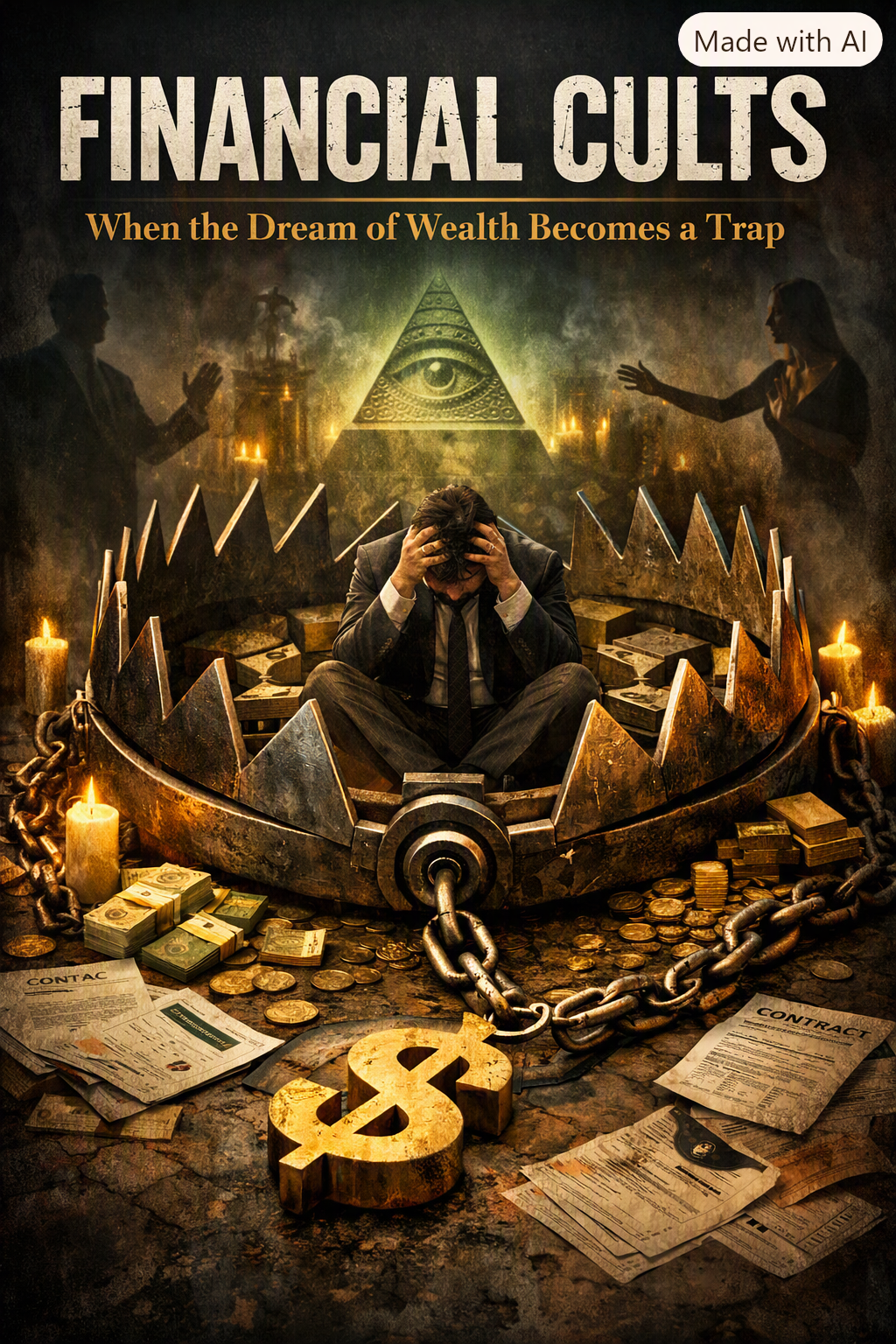
Financial Cults - When the Dream of Wealth Becomes a Trap
Financial cults are groups that use promises of quick wealth, financial freedom and personal success to gain control over people. They can appear through predatory MLM businesses, expensive coaching programs, trading communities, or high pressure success seminars. This article explores how these groups attract members through secret knowledge, emotional manipulation, social pressure and isolation. It also examines the financial, personal and psychological damage they can cause. Most importantly, the article identifies warning signs such as guaranteed profits, recruitment pressure, discouraging questions, while offering practical ways to protect yourself through independent research, professional advice, careful financial tracking and thoughtful decision making.
What Is A Financial Cult?
These groups sell the dream that you can escape the regular working world. They train members to believe that working an ordinary job is a foolish choice designed for unambiguous followers, while joining their group makes you part of an elite, forward thinking brotherhood.

Financial Cults Operate Across Many Different Fields.
- Predatory Multi Level Marketing (MLM) Companies - While direct sales is a common business model, some MLMs cross the line into cult territory. They push members to recruit friends and family rather than sell actual products. Members are forced to buy large amounts of unsold inventory every month just to keep their status in the company.
- Charismatic Wealth Gurus and High Ticket Coaching - These are individual influencers who promise to teach you the secrets of real estate, stocks or business success. They sell extremely expensive mentorship programs, often charging thousands of dollars for basic advice that you could easily find online for free.
- Speculative Cryptocurrency and Trading Groups - Certain online communities build aggressive cult like followings around specific digital coins or trading methods. They use slogans to shame anyone who sells their shares or asks sensible questions about dropping prices.
- Success and Mindset Seminars - These groups host loud, energetic weekend events focused on manifesting money or fixing your poor mindset. They use high energy music, sleep deprivation and intense group pressure to sell expensive follow up courses.

The Hidden Mechanics - How Financial Cults Operate
- The Secret Knowledge Trap - Cult leaders always claim to possess a hidden formula an secret algorithm or a private business strategy that regular people do not know about. They teach members to look down on traditional education, standard careers and sensible saving habits. By convincing you that the outside world is completely wrong about money they make sure you only trust their advice.
- Strategic Love Bombing - When a new person joins the group, existing members shower them with attention, compliments, warm welcomes and instant friendship. This tactic is known as love bombing. It satisfies a deep human need for community and belonging. Because the group feels so kind and welcoming, recruits drop their natural defenses and stop asking critical questions.
- Deliberate Isolation - Once a member feels at home, the leader begins to separate them from outside influences. Members are told that anyone who questions the group including spouses, parents, or lifelong friends is "toxic" "jealous" or carrying a "poor person's mindset." The group urges you to cut ties with skeptical loved ones. Once you lose your outside support system, the cult becomes your only source of truth, advice, and social life.
The True Dangers Of Joining A Financial Cult
- Severe Economic Harm - Most members end up losing significant amounts of money. Many take on heavy personal debt, ruin their credit scores or exhaust their retirement funds. Some even lose their homes or fall into bankruptcy because they kept investing in a promise that never came true.
- Ruined Personal Relationships - Because financial cults train members to see non members as enemies or targets to recruit, personal relationships break down. Friendships dissolve and families drift apart. Spouses often divorce over hidden debts and total devotion to the group leader.
- Deep Psychological Strain - Living in a high pressure environment creates constant stress and anxiety. Members constantly worry about meeting recruitment targets or affording the next mandatory seminar. When the system eventually fails, former members experience deep feelings of shame, depression and loss of identity. Rebuilding trust in oneself and others takes a very long time.
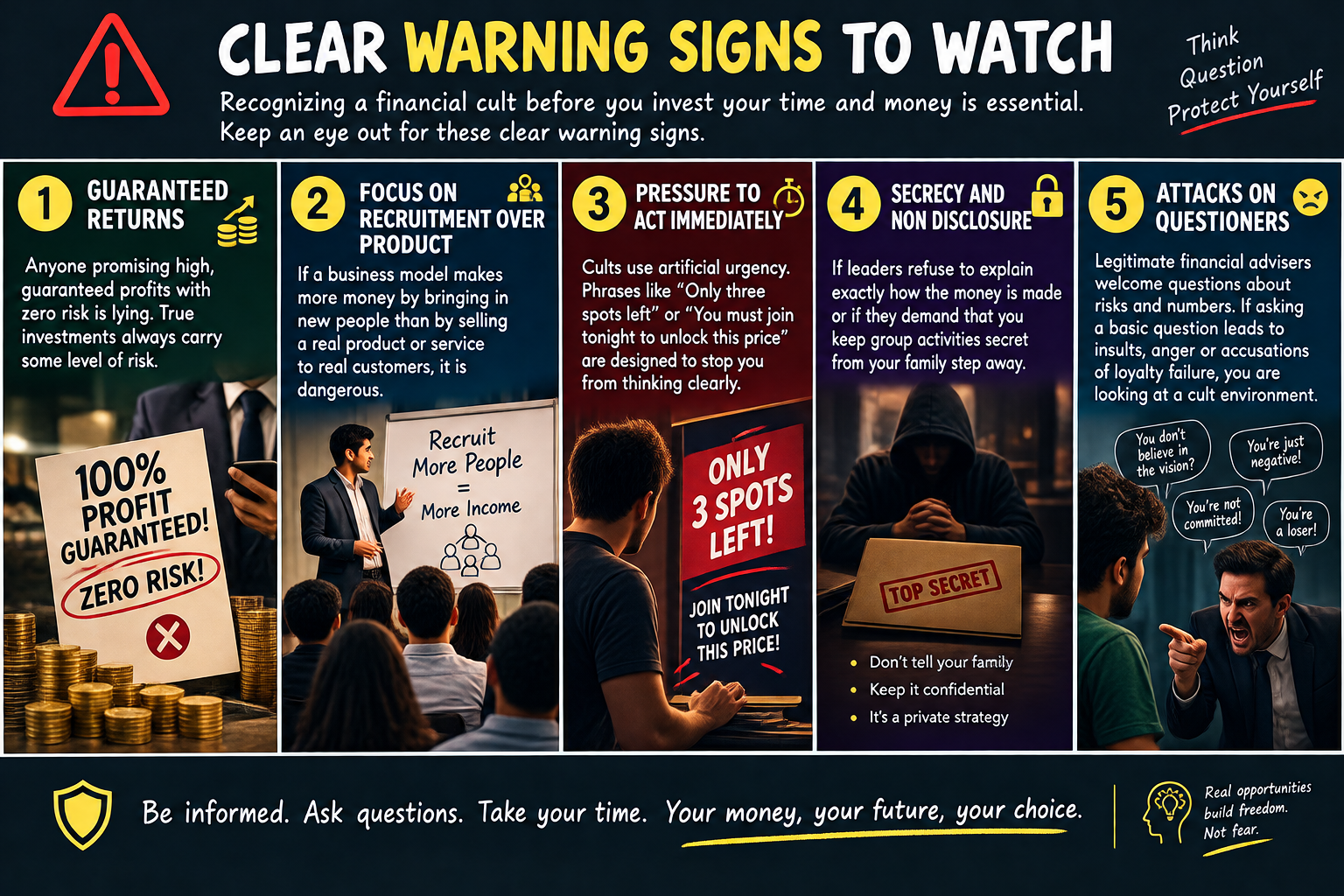
Clear Warning Signs To Watch
- Guaranteed Returns - Anyone promising high, guaranteed profits with zero risk is lying. True investments always carry some level of risk
- Focus on Recruitment Over Product - If a business model makes more money by bringing in new people than by selling a real product or service to real customers, it is dangerous.
- Pressure to Act Immediately - Cults use artificial urgency. Phrases like Only three spots left or You must join tonight to unlock this price are designed to stop you from thinking clearly
- Secrecy and Non Disclosure - If leaders refuse to explain exactly how the money is made or if they demand that you keep group activities secret from your family step away.
- Attacks on Questioners - Legitimate financial advisers welcome questions about risks and numbers. If asking a basic question leads to insults, anger or accusations of loyalty failure, you are looking at a cult environment.
Practical Ways To Protect Yourself
- Keep Track of Every Single Dollar - Do not rely on promises or group excitement. Keep a private spreadsheet tracking every dollar you spend on membership fees, products, events and training against the actual income you bring in. The cold numbers will tell you the truth.
- Verify Credentials Independently - Never trust income claims made on social media, flash cars in videos or testimonials on a website. Check whether advisers are registered with recognized government financial authorities.
- Talk to Neutral Professionals - Before signing contracts or transferring money, show the paperwork to an independent lawyer, certified accountant or licensed financial planner who has no connection to the group.
- Take Time Before Big Decisions - Give yourself a strict cooling off period. Rule never sign a contract or transfer money for a high ticket program on the same day you attend a high energy presentation.
Comments (0)
Leave a comment
No comments yet. Be the first to share your thoughts!
About the Author

Tell us a little about yourself.