Dream Job or Any Job? Reality of Youth Around the World
Introduction: The Question Every Young Person Faces
In today's environment, one of the most popular queries among students and young adults is: "Should I wait for my dream job or accept any available job?" This subject is growing increasingly significant as the cost of living rises, employment competition heats up, and career prospects become uncertain in many countries.
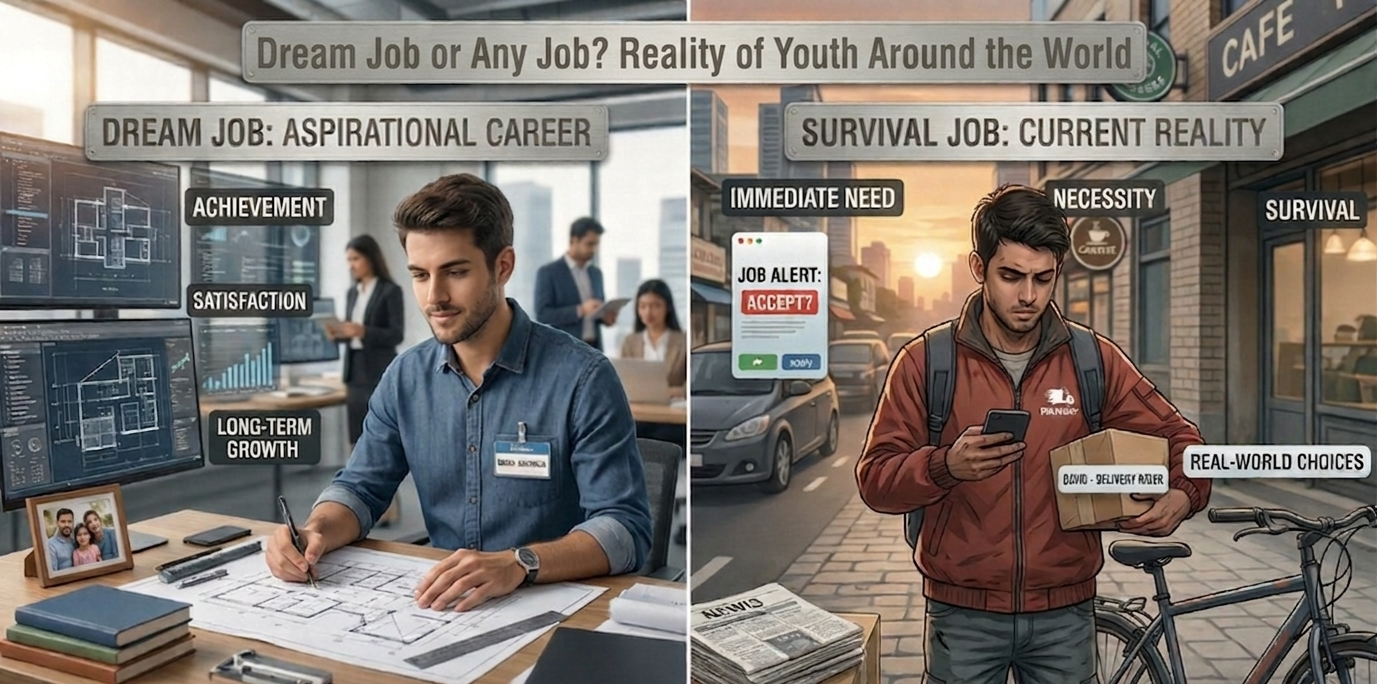
A dream job is usually one that aligns with a person's passion, abilities, education, and long-term aspirations. It could be a professional function in medicine, law, engineering, business, media, technology, or the creative industries.
On the other hand, "any job" refers to taking whatever work is available, even if it is unrelated to one's studies or interests, in order to earn money and survive.
Many young people around the world are facing this difficult decision. Some believe that waiting for the perfect chance is preferable, while others believe that accepting any work is required for survival. This essay investigates both sides of the topic as well as the current global scenario for young employment.
The Dream Job Ideal: Hope and Expectations
For many young people, education is closely linked to the prospect of landing a dream job. Students are frequently encouraged from an early age to choose occupations as doctors, engineers, teachers, corporate executives, or creative professionals.
These jobs are generally seen as steady, reputable, and financially rewarding. A dream job provides people a sense of purpose and fulfillment since they are doing what they enjoy.
For example, a student who appreciates technology may aspire to work as a software developer for a multinational corporation. Someone who is enthusiastic about teaching may desire to become a university professor or a school teacher.
Dream occupations are crucial because they encourage kids to work hard, build skills, and stay motivated. They instill ambition and direction in life. However, problems develop when expectations do not correspond to real-world opportunities.
The Reality of the Global Job Market
Many countries' job markets are extremely competitive. Every year, millions of graduates enter the workforce, yet the number of available employment is frequently limited.
While some government or public sector positions are secure and appealing, they are typically limited and extremely competitive. Private enterprises may provide additional options, but they frequently require experience, good communication skills, and technological proficiency.
As a result, a large number of educated young people are unemployed or underemployed. Some are forced to labor in positions that do not fit their qualifications.
A social sciences or arts graduate, for example, may find work in retail, customer service, delivery services, or contact centers. This circumstance might cause irritation, tension, and apprehension about the future.
The “Any Job” Reality: Survival and Responsibility
Because of financial constraints, many young people over the world will take any available employment. This decision is typically based on necessity rather than choice.
A constant income is required to cover the expense of living, which includes rent, food, transportation, and education. Many families cannot provide long-term support for unemployed young adults.
Taking any employment can help young people achieve financial independence. It also offers significant experience in communication, teamwork, discipline, and responsibility.
For example, someone working in a supermarket or in customer service may receive valuable workplace experience that may benefit them later in their careers.
However, working in unrelated fields for too long might lead to disillusionment and a sense of wasted education.
Pressure from Society and Family
In many cultures, family expectations influence job choices. Parents frequently hope that their children will find steady and respected employment after they complete their studies.
When young individuals are unable to find their intended jobs, they may experience mental stress or guilt. Families may also experience financial difficulties after investing extensively in schooling.
Society sometimes assesses people based on their job designations. Professional employment are frequently treated with more respect than informal or low-income jobs, despite the fact that all work is equally valuable.
This social pressure can have a significant impact on job selections as well as mental health.
Skills vs Degrees: A Changing Job World
The job economy is currently changing rapidly. A degree is no longer enough to ensure work. Employers today search for practical abilities such as:
- Communication skills
- Computer and digital skills
- Problem-solving abilities
- Creative and adaptable
As a result, many young people are pursuing skill-based occupations such as freelancing, digital marketing, coding, graphic design, and content development.
Online platforms have also created new chances for workers to work remotely for international clientele.
This demonstrates that both dream jobs and other professions can serve as stepping stones for those who continue to enhance their talents.
The Emotional Struggle: Passion vs Pressure
Choosing between a dream career and any employment is not only a financial decision, but also an emotional one.
Waiting too long for your desired career can cause financial hardship and uncertainty. However, accepting a job that is uninteresting may result in discontent and a loss of motivation.
Many young individuals struggle with maintaining this equilibrium. They want to pursue their passions while still supporting themselves and their families.
Internal conflict has an impact on confidence, mental health, and long-term planning.
Finding a Balance: A Practical Approach
Many experts advocate for a balanced strategy rather than picking simply one method.
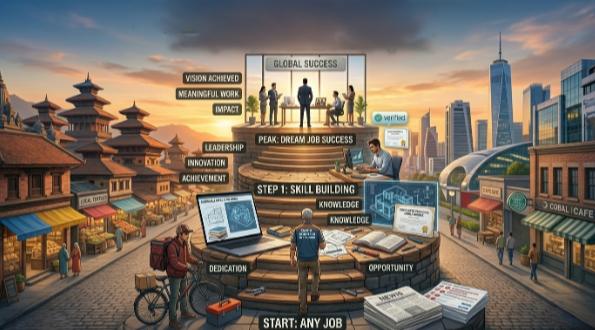
Young individuals can start with any employment to make money and get experience while honing their talents for their chosen career.
This method enables for advancement without being constrained by finances.
A business graduate, for example, could work in sales or customer service while studying marketing online or beginning a side business. They can gradually get closer to their dream job.
As a result, any employment becomes a stepping stone rather than a destination.
The Role of Education and Society
Education systems play a significant part in resolving this issue. Universities and colleges should emphasize not only theory, but also practical skills, internships, and professional development.
Governments and organizations can also contribute by establishing additional work possibilities, encouraging entrepreneurship, and promoting vocational training programs.
Better links between education and the labor market can help young people enter the workforce more seamlessly.
Conclusion: Redefining Success
There is no correct response to the question "Dream job or any job?" Depending on the circumstances, both solutions are useful.
A dream career provides passion, identity, and long-term contentment. Any work brings pay, experience, and security.
Instead of perceiving them as diametrically opposed, consider them stages in a professional progression.
True success is more than just job titles; it is also about growth, learning, and stability. In today's rapidly changing environment, adaptability and abilities are more vital than waiting for perfection.