1984 by George Orwell: The Silent Surveillance Within Us All
Some books warn us about the world, while others warn us about ourselves. In this reflective review of George Orwell’s 1984, we move past dystopian politics to explore the human heart behind Big Brother. Discover how Winston Smith’s journey unveils our own daily struggles with conformity, the fragility of personal truth, and the quiet courage required to hold onto independent thought.
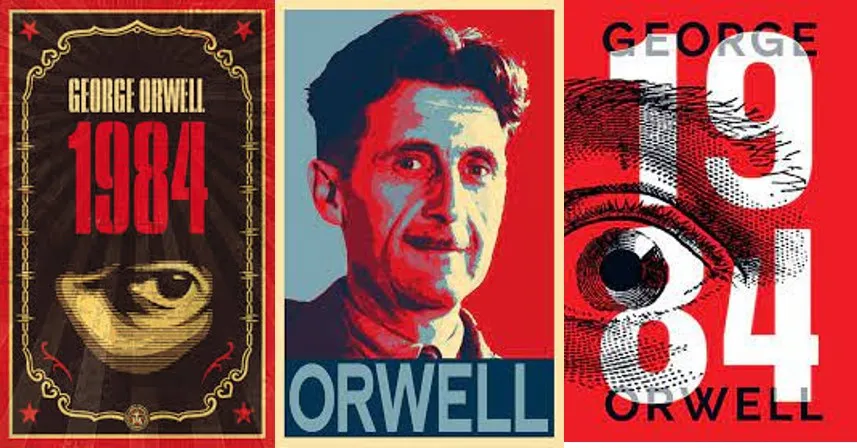
1984: The Silent Surveillance Within Us All
Some books we read for pure entertainment. Others we read because they force us to look in the mirror. George Orwell’s 1984 belongs firmly in the second category. As I turned its dark, unsettling pages, I didn't just feel like I was reading a piece of classic dystopian fiction; I felt like I was watching a quiet warning about the fragile nature of human freedom and individual truth. This is not merely a story about a futuristic totalitarian regime or a world filled with endless surveillance. It is a deeply personal exploration of identity, fear, doublethink, and the delicate value of our own private thoughts.
The Burden of Conformity: Winston and Julia
The story unfolds in Oceania, a world blanketed by the suffocating presence of Big Brother. Winston Smith, an ordinary man trapped within the Ministry of Truth, spends his days rewriting historical records to match the regime's constantly shifting narrative. Yet, inside him lies a quiet, dangerous desire: the wish to retain a mind of his own.
When Winston meets Julia, their secret romance becomes a small act of rebellion in a society where even having an unapproved feeling is a fatal crime. What moved me most about their relationship was not just their defiance, but how it exposed the fundamental human need for genuine connection. In a world built entirely on suspicion and fear, wanting to love someone honestly becomes the ultimate form of courage.
Their bond reminded me of how easily we can take simple individual freedoms for granted. It highlights the heavy weight of wearing a mask every day just to fit in or stay safe, and how exhausting it becomes to hide who you truly are from the surrounding world.
The Distortion of Memory and Truth
One of the most terrifying concepts Orwell presents is the idea that if everyone accepts a lie, that lie becomes the truth. Through the Ministry of Truth, history is continually erased and rewritten. Yesterday's allies become today's enemies with a single stroke of a pen, and the public is forced to accept these contradictions without hesitation.
Reading this made me pause and reflect on how we manage truth in our own daily lives. How often do we alter our memories or rationalize our mistakes just to protect our pride? How easily do we allow outside influences, media, or social expectations to dictate what we believe to be true?
Orwell brilliantly shows that controlling the past is really about controlling the future. When we lose our connection to genuine truth, we surrender our power to decide who we are and what we stand for. We begin to accept comfortable narratives handed down by others, forgetting that a society unable to distinguish between fact and fiction has already lost its voice.
Room 101: Facing the Fear Within
In the final, devastating portion of the novel, Winston is brought face-to-face with his deepest nightmare in Room 101. What makes Room 101 so uniquely horrifying is not that it imposes a generic cruelty, but that it is tailored specifically to the individual. The Ministry of Love does not merely break your body; it studies your heart, finds the one secret terror you cannot bear to face, and weaponizes it against you.
It is here that Orwell poses a profound, heartbreaking question: When pushed to our absolute limits, what will we sacrifice to protect ourselves?
Winston’s struggle isn't just a physical fight against torture; it is an internal battle for his soul. For most of the novel, Winston believes that as long as he keeps his inner feelings hidden, his mind remains uncaptured. He believes that the party can make him say anything, but they cannot make him feel it. Yet, when faced with the cage of hungry rats, that ultimate sanctuary breaks. In a moment of sheer, instinctive self preservation, he screams the words that mark his total moral collapse: "Do it to Julia! Not me!"
His tragic realization that fear can make us betray even the people we care about most is one of the most sobering insights in modern literature. It shows that true victory for a repressive power is not just forcing obedience, but destroying a person's capacity to love. It serves as a stark reminder that true freedom is not merely physical it is the strength to hold onto our values, our empathy, and our loyalty when fear tempts us to let them go.
A Warning That Endures Through Time
Even long after closing 1984, its shadow lingers in the mind. It taught me that freedom begins in the mind in the quiet commitment to think critically, speak honestly, and hold onto our personal integrity regardless of external pressures. When we stop questioning what we are told, we slowly hand over the keys to our own individuality.
Orwell does not offer a comfortable or neatly happy ending. Instead, he offers something far more valuable: an urgent call to awareness. He reminds us that the greatest danger to humanity is not just physical oppression, but the slow, silent surrender of our own independent thought. It is the subtle choice to stay quiet when we know something is wrong, simply because conforming is easier than standing alone.
What makes 1984 so haunting in the modern world is how relevant its warnings feel today. We may not live under the visible eye of Big Brother, but we often construct our own invisible cages. We curate our thoughts to fit online trends, filter our opinions to avoid conflict, and swallow our true feelings out of fear of judgment. In doing so, we risk falling into the exact trap Orwell warned about trading authentic conviction for comfortable agreement.
Ultimately, the book leaves us with a quiet yet demanding responsibility. It asks us to guard our minds, to cherish our ability to doubt and reflect, and to remember that our thoughts remain our last true sanctuary.
Is there a belief you hold today that you have never truly questioned and if challenged, would you have the courage to stand by it?
Comments (0)
Leave a comment
No comments yet. Be the first to share your thoughts!
About the Author
Tell us a little about yourself.